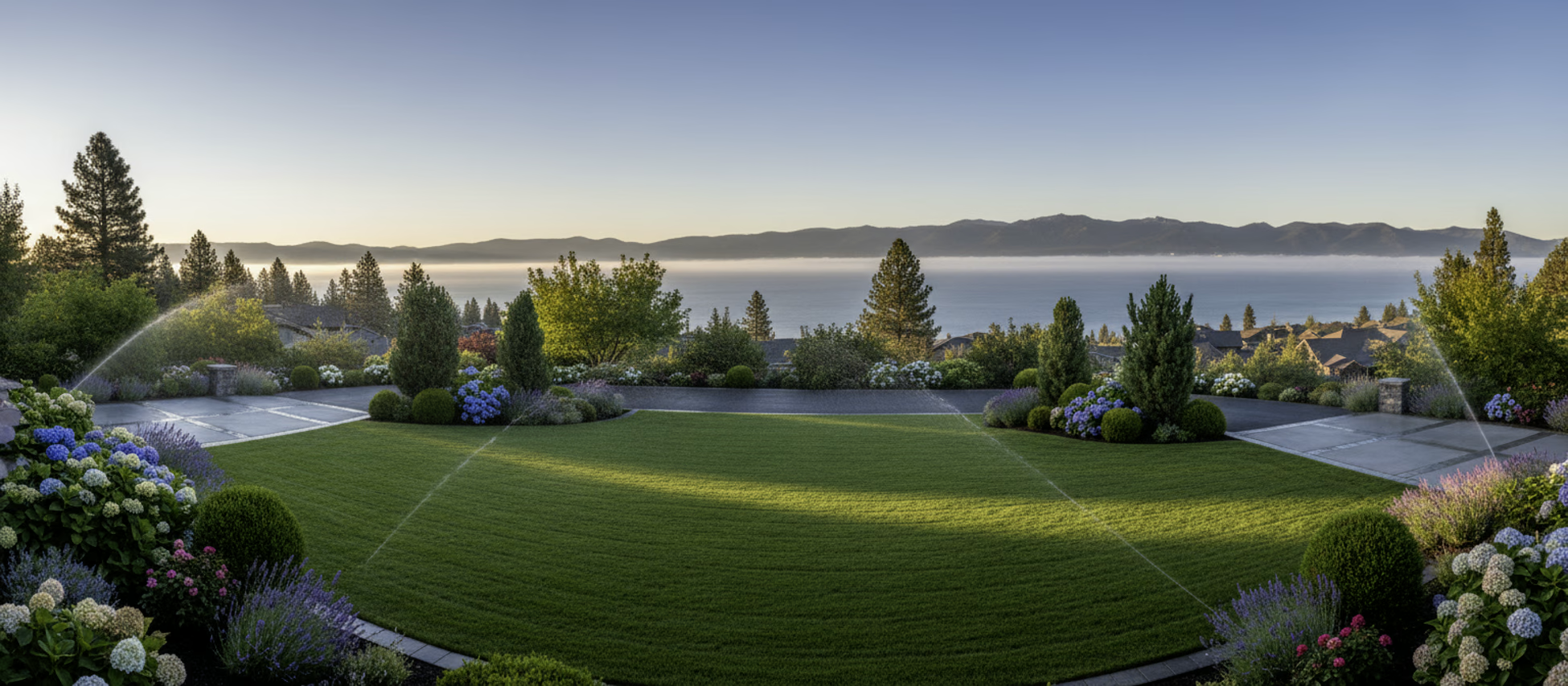

Incline Village's peak landscape season runs from mid-June through early September—a 12-week window that delivers the entire year's growth, blooming, and water consumption in rapid succession. Irrigation systems are operating at maximum load, plants are at their highest transpiration rates, pests and diseases have their maximum window of activity, and weeds compete aggressively for the water and nutrients delivered to ornamental plantings.
At the same time, the same factors that make Lake Tahoe an extraordinary environment—the intense UV, the elevation-adjusted ET rates, the exposure to sudden afternoon thunderstorms—mean that standard maintenance protocols from lower elevations are inadequate. Lakescaping LLC has managed peak-season maintenance at Nevada Lake Tahoe properties for 33 years. This guide describes our comprehensive summer maintenance program.
Peak-season irrigation management is the single highest-value maintenance activity for Lake Tahoe properties during summer. Evapotranspiration rates at 6,200 feet during July and August can exceed sea-level rates by 15–25% due to lower atmospheric pressure and higher UV intensity, even though ambient temperatures may be lower.
Irrigation controllers programmed in May or June need mid-season updates as the season peaks. We review and adjust zone run times in late June, early August, and mid-September to track actual ET rates rather than following a static schedule. Smart controllers with ET sensors handle this automatically—we verify sensor calibration and review adjustment factors during service visits.
Monthly irrigation inspections during peak season catch problems before they damage plantings or waste water. Our inspection protocol covers:
Natural turf areas at Incline Village require weekly mowing during peak season at a height of 3–3.5 inches—taller than typical residential settings because the higher cut shades soil, reduces moisture loss, and promotes deeper root development. We use sharp blades and clippings are mulched or removed depending on turf density.
Turf fertilization follows a peak-season schedule appropriate for the species mix: slow-release nitrogen in June, potassium-forward maintenance formula in August, and no nitrogen after September 1 to avoid stimulating growth that won't harden before freeze.
TRPA weed management regulations require that herbicide applications use products approved for use in the Lake Tahoe watershed. Aquatic-safe formulations are required within 100 feet of any surface water. We use:
Invasive species—cheatgrass, puncturevine, yellow starthistle—require immediate treatment when identified, as TRPA's invasive species program requires prompt removal to prevent spread.
Peak season is when plant health problems manifest most visibly. Our maintenance visits include systematic assessment of:
Pest identification: Pine bark beetle activity (pitch tubes on ponderosa pines), aphid colonies on deciduous shrubs, spider mite infestations on stressed conifers. Treatment protocols are selected to minimize impact on the non-target insect community, including native pollinators.
Disease monitoring: Phytophthora root rot in over-watered zones, powdery mildew on susceptible ornamentals during July humidity spikes, needle cast on pines stressed by drought or poor drainage.
Nutritional status: Yellowing foliage patterns indicate specific nutrient deficiencies—chlorosis between leaf veins suggests iron or magnesium deficiency common in high-pH Tahoe soils. We address these with targeted soil amendments rather than broadcast fertilizer.
Lakescaping LLC (Nevada C-10 #0086320) has served property owners in Incline Village, Crystal Bay, Glenbrook, and Zephyr Cove for 33+ years. Contact us for a no-obligation on-site consultation.
Serving Nevada properties only — Incline Village, Crystal Bay, Glenbrook, and Zephyr Cove.
For full-service properties with irrigation, water features, and extensive planting, weekly visits are recommended during July and August. Properties with less intensive planting and low-maintenance groundcover areas can be maintained on a bi-weekly schedule. Irrigation systems should be inspected monthly regardless of visit frequency.
TRPA limits nitrogen fertilizer applications to protect water quality in the Lake Tahoe basin. Applications within 100 feet of surface water require TRPA-approved low-phosphorus formulations. Slow-release formulations are preferred as they reduce the risk of nutrient runoff during irrigation and storm events. We use TRPA-compliant fertilizer products on all Lake Tahoe properties.
Indicators of over-irrigation include moss or algae growth in soil, standing water around drip emitters, mushroom appearance in turf areas, and yellowing foliage (which can indicate root zone saturation, not drought). Under-irrigation shows as wilting during the day, dry cracked soil at emitter radius, and early color change in drought-stressed species. Monthly inspection by a qualified irrigation technician is the most reliable way to ensure proper coverage.
We can assist with preventive pine bark beetle management (maintaining tree health through proper irrigation, mulching, and avoiding mechanical injury that creates entry wounds), but active bark beetle infestations require a licensed pesticide applicator. We coordinate with licensed pest control operators for infested trees and provide ongoing preventive maintenance. TRPA has specific requirements for the handling and disposal of beetle-infested wood.
Document the location and appearance (photograph) and contact us for identification and treatment planning. TRPA's invasive species program requires prompt reporting and removal of certain high-priority invasives (cheatgrass, Scotch broom, yellow starthistle). Treatment options depend on the species, infestation size, and proximity to water features. Early detection and treatment is significantly less expensive than addressing an established infestation.
our mountain estate deserves expert craftsmanship. Partner with our licensed Nevada team to design and build a resilient, high-end landscape tailored to your vision.