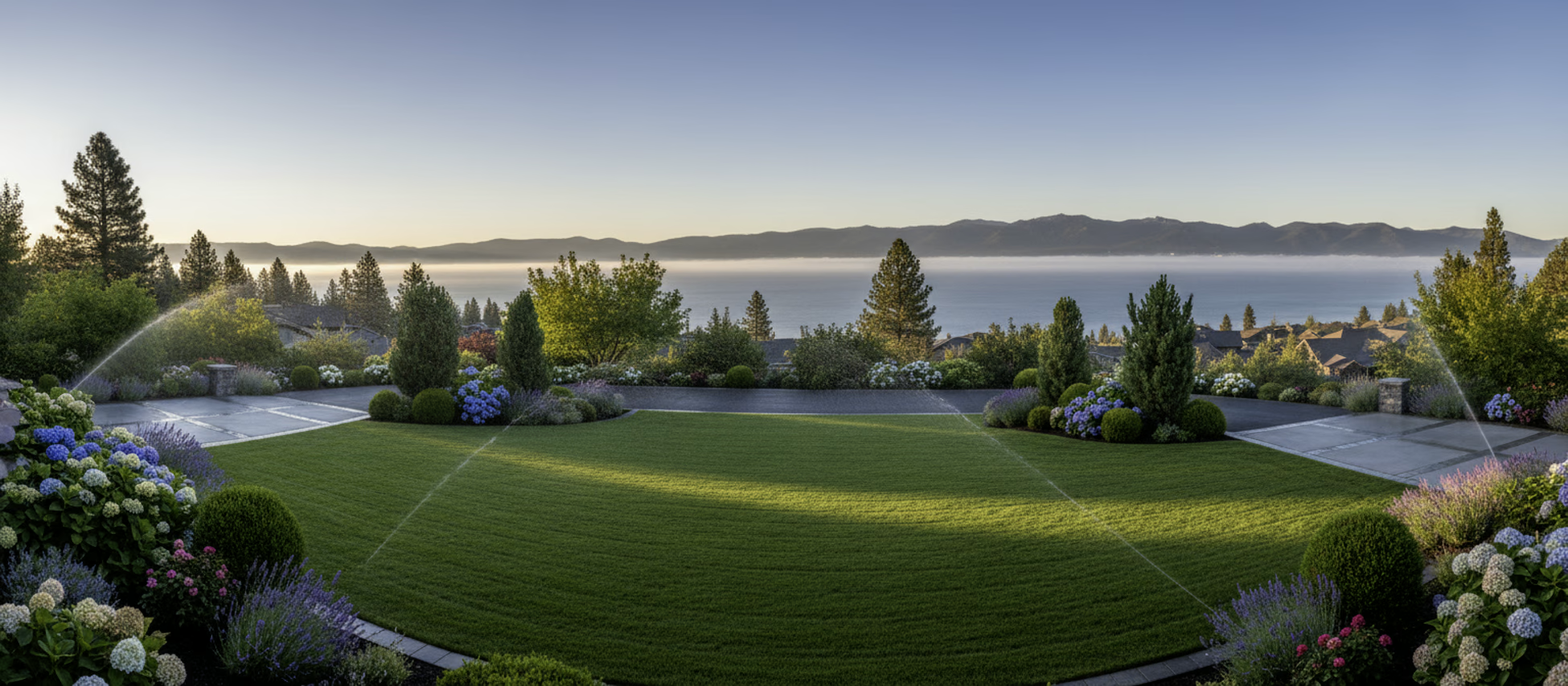

Most landscaping fails in mountain climates not because the design was ugly — but because the design ignored reality. At Lake Scaping LLC, we’ve spent 33+ years building landscapes in Incline Village and Crystal Bay, Nevada that survive what this environment actually delivers: -10°F winters, 8–10 feet of annual snowpack, 60–100 freeze-thaw cycles per year, and UV radiation 20–25% more intense than at sea level. The difference between a landscape that looks great in year one and one that looks great in year thirty is engineering.
This guide explains our engineering-first philosophy — what it means in practice for every element of your landscape, and why it matters more at 6,200 feet than anywhere else. Nevada contractor license C-10 #0086320.
In 33 years of operating exclusively in the Incline Village and Crystal Bay market, we’ve seen hundreds of landscape failures. The pattern is consistent:
Every one of these failures is preventable — with engineering specifications calibrated to our actual climate.
Every hardscape installation we build starts with the base, not the surface. Our standard paver base specification for Incline Village is 12–18 inches of compacted angular aggregate with integrated drainage below the frost line. We use geotextile fabric separation layers, lift-by-lift compaction to 95% Proctor density, and steel edge restraints at 6-inch spike spacing. The surface material — granite, basalt, concrete paver — is the finishing element. The base is the investment.
For retaining walls, we engineer to the soil pressure and freeze-thaw lateral load requirements specific to Incline Village’s soil types and slope conditions. Our retaining structures include engineered drainage behind the wall face — because saturated soil behind a wall that then freezes generates pressure that destroys walls built without drainage relief.
Learn more about our alpine hardscape installation services and engineered retaining wall systems.
The most expensive plant mistake we see in Incline Village landscapes is the use of ornamental species selected for aesthetics without reference to USDA hardiness zones, elevation, or soil adaptation. Incline Village sits in Zone 6a/6b — significantly colder than the Zone 7–8 conditions assumed by most nursery plant tags.
Our plant palette for Incline Village and Crystal Bay landscapes is built around species with documented performance at 5,500–7,000 feet elevation in the Sierra Nevada region:
Every plant we install is TRPA-compliant for the Lake Tahoe basin and selected for fire-resistant characteristics consistent with Nevada’s defensible space requirements. View our Nevada native plant installation guide.
Every irrigation system we install is designed for complete winterization — not as an afterthought, but as a structural engineering requirement. This means:
We also design for water efficiency from the outset. TRPA water use regulations for Lake Tahoe basin properties are increasingly stringent. Drip-dominant systems with smart ET-based controllers are our default specification for new landscape installations. Explore our water-efficient irrigation systems and drip irrigation for alpine gardens.
Drainage is the most underappreciated element of alpine landscape engineering. When 8–10 feet of snowpack melts in 4–6 weeks every spring, every flat surface becomes a sheet flow catchment, every low point becomes a pooling area, and every improperly graded bed becomes an erosion channel.
Our drainage engineering for Incline Village properties includes:
Learn about our alpine drainage solutions and drainage correction services for existing Incline Village properties.
Landscape lighting in Incline Village must meet TRPA dark-sky compliance requirements — a regulatory framework that restricts fixture brightness, beam angle, and light trespass. Beyond compliance, our lighting designs are specified for alpine durability: all-weather fixtures rated for -20°F operation, marine-grade wiring connections, and conduit runs designed to drain condensation that would freeze and crack non-draining installations.
We specify LED fixtures with minimum 50,000-hour rated life to reduce the maintenance burden of fixture replacement at elevation, where access for lighting maintenance is more time-consuming than at lower-elevation properties. View our dark-sky-compliant landscape lighting services.
When we build to our full engineering specification for an Incline Village or Crystal Bay estate, here’s what the 30-year maintenance trajectory looks like:
Compare this to the typical non-engineered Incline Village landscape: hardscape replacement at 5–7 years, plant replacement annually, irrigation repair every spring, drainage issues addressed reactively as they damage structures. The engineering investment pays back multiple times over the property’s lifespan.
All landscape work in the Lake Tahoe basin is subject to TRPA oversight. As a Nevada-licensed contractor (C-10 #0086320) who has operated exclusively in the Incline Village and Crystal Bay market for 33+ years, we know the TRPA regulatory framework as intimately as any landscape contractor in the basin. We manage TRPA applications, Washoe County permits, and HOA approvals as integrated components of every project scope — not as separate processes the client must manage independently.
Building a landscape that lasts 30 years in Incline Village or Crystal Bay, Nevada requires engineering knowledge specific to alpine environments, 33+ years of empirical evidence about what works and what fails in this specific climate, and regulatory expertise in TRPA compliance, Washoe County permitting, and Nevada contractor requirements. Lake Scaping LLC (Nevada C-10 #0086320) provides all three.
Request a site consultation for your Incline Village or Crystal Bay property. We serve Nevada properties in the Lake Tahoe basin exclusively — Incline Village, Crystal Bay, Glenbrook, and Zephyr Cove.
Primarily because of freeze-thaw cycling intensity and depth. Incline Village experiences 60–100 freeze-thaw cycles annually with frost penetration to 18–24 inches. Landscape materials and installation methods designed for mild climates fail under this repeated stress. Engineering specifications calibrated to our actual conditions prevent these failures.
Approximately 90 days — from mid-June to mid-September. This compressed season affects plant selection (must establish quickly), irrigation scheduling (high-frequency summer watering followed by complete winterization), and construction windows (May through October for most hardscape and installation work).
Most species in our Nevada-native plant palette are categorized as fire-resistant or fire-safe under Nevada Division of Forestry and TRPA defensible space guidelines. We design plant placement to meet Zone 1 and Zone 2 defensible space requirements for all Incline Village and Crystal Bay properties.
Yes. We provide full-service landscape design, engineering, installation, and ongoing maintenance for Incline Village and Crystal Bay estates. Our team manages the complete project lifecycle including TRPA permitting, Washoe County approvals, and HOA submissions — from initial site assessment through seasonal maintenance programs.
Our pricing reflects engineering specifications, alpine-rated materials, and 33+ years of alpine-specific expertise. The total cost of ownership over 20–30 years — accounting for the replacement and repair costs that non-engineered installations typically generate — consistently favors the engineering-first approach. We provide detailed proposals that include materials specifications so clients can understand exactly what they’re getting.
our mountain estate deserves expert craftsmanship. Partner with our licensed Nevada team to design and build a resilient, high-end landscape tailored to your vision.