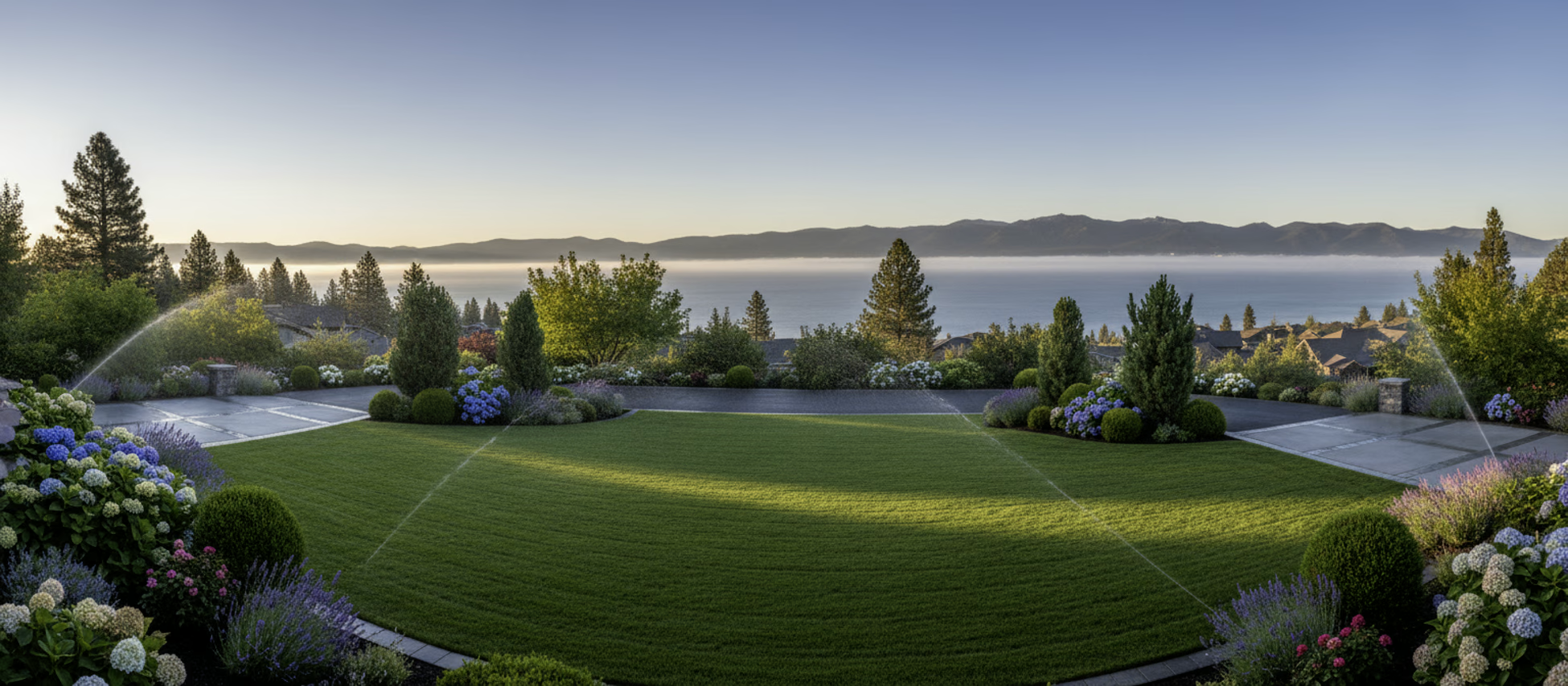

Spring is finally here in Incline Village, Nevada, and with it comes the much-anticipated start of your irrigation system. But unlike the simple task of turning on a faucet, irrigation startup in our high-altitude environment requires careful attention to detail and a comprehensive approach. After months of winter dormancy and the unique challenges of our alpine climate, your irrigation system needs a proper spring wake-up procedure to ensure it operates efficiently and effectively throughout the growing season.
At 6,200 feet above sea level, Incline Village's irrigation systems face specific challenges that differ from lower-altitude systems. The extended freeze-thaw cycles, heavy snowpack, and compressed growing season create unique startup requirements. Here's what makes our alpine irrigation startup service essential for your property.
Spring irrigation startup at Incline Village is not simply turning the water back on. The compressed growing season, the high risk of late-season hard freezes through late May, and the significant potential for winter damage in irrigation systems that were exposed to 200+ freeze-thaw cycles require a systematic startup process that identifies and repairs damage before the system is put into service for the season. Pressurizing a damaged system propagates damage — a cracked pipe fitting that was a minor issue after winter becomes a significant leak that can run undetected for days under mulch or in a crawlspace.
Lakescaping LLC's spring irrigation startup service is a comprehensive process, not a simple water-on service call. We inspect before pressurizing, test each zone at operating pressure, map coverage gaps and adjust heads, test the backflow preventer, and program the smart controller for the spring schedule.
Before the system is pressurized, we inspect all visible system components for winter damage: above-grade pipe sections, controller housing and wiring, backflow preventer assembly, above-grade valve boxes, and exposed sprinkler heads. Cracked pipe sections, split controller housings, and backflow preventers with visible freeze damage are documented before water is applied to the system.
We also walk the irrigated areas to assess soil conditions. Pressurizing the system before saturated soils have drained enough to accept foot traffic without damage is counterproductive. We schedule startup after snow has cleared and soils have drained to a workable state.
Each irrigation zone is activated individually to verify valve operation, check for obvious pipe failures (sudden drops in zone flow, water surfacing from underground), and observe head operation before performing detailed head inspection. This sequential activation identifies system-level failures — a failed valve, a major pipe break — before time is invested in individual head adjustment on zones that are not functioning.
For systems with Rainbird or Toro smart controllers, zone activation is performed through the controller's manual activation function to confirm that controller-to-valve communication is functioning correctly.
Each head on each zone is inspected for: physical damage (broken riser, cracked cap, missing nozzle), nozzle condition (clogging, wear), arc of coverage, and radius of throw. Heads are adjusted to correct arc, nozzle, and radius as needed. Broken or worn heads are flagged for replacement.
At Incline Village, where pine needle accumulation in planting areas is heavy, rotary sprinkler pop-up heads often have debris accumulation in the head body that impairs pop-up travel and rotation. We clean heads as part of the startup process and flag heads where debris accumulation is causing functional problems.
Backflow preventer testing is performed as part of or immediately following spring startup. IVGID requires annual testing, and spring startup is the natural service occasion to complete this required test. We submit test results to IVGID on behalf of the property owner. Failed assemblies are repaired or replaced before the system is returned to full service.
Spring controller programming establishes the watering schedule appropriate for the early season: lower run times reflecting lower evapotranspiration demand in May and early June, appropriate start times to avoid watering during peak wind periods (afternoon at Incline Village), and sensor check to confirm rain sensor and freeze sensor function.
For Rainbird and Toro smart controllers with ET-based scheduling, we confirm that the controller's weather station or Wi-Fi weather data connection is functioning and that the ET-based scheduling algorithm is set to the appropriate schedule type for the site's plant mix and exposure.
Lakescaping LLC (Nevada C-10 #0086320) has served property owners in Incline Village, Crystal Bay, Glenbrook, and Zephyr Cove for 33+ years. Contact us for a no-obligation on-site consultation to assess your property's specific needs.
Serving Nevada properties only — Incline Village, Crystal Bay, Glenbrook, and Zephyr Cove.
Target late May — after the risk of hard freezes (below 28°F) has passed and soil temperatures at 6 inches have exceeded 45°F. At Incline Village, the safe startup window typically opens between May 20 and June 5 depending on the year. Starting earlier wastes water on dormant plant material and risks re-freezing of water in the system during a late frost event. We recommend scheduling your startup appointment in April to ensure availability in the late May startup window.
The most common repairs found during spring startup are: broken spray heads (from snow plow or snowblower contact, or from frost heave pushing heads out of the ground), cracked pipe fittings in areas where incomplete winterization allowed residual water to freeze, failed valve diaphragms (valves that will not open or will not close), and backflow preventer assemblies damaged by freeze. Most of these repairs are straightforward — broken heads are replaced same-day, cracked fittings are excavated and repaired.
Yes, with important caveats. DIY startup requires: a working knowledge of your system's zone layout, valve locations, and controller programming; the ability to identify and flag damaged heads and fittings rather than simply hoping they will work; and the ability to perform a backflow preventer test (which requires calibrated test equipment and BPAT certification — not available for DIY). If you perform your own startup, we recommend a professional system assessment every 3 years to identify coverage issues, efficiency losses, and components that are showing wear.
A comprehensive spring startup service (including zone-by-zone activation, head inspection and adjustment, controller programming, and backflow preventer test) for a typical residential system at Incline Village typically costs $250–$500. Systems with more zones, larger coverage areas, or with backflow preventer repair needs are at the higher end. We provide a scope and price before the service visit and itemize any repair costs separately from the startup service fee.
Spring startup is an efficient time to also schedule: backflow preventer testing (required annually, can be done simultaneously with startup), spring landscape assessment (walk the property with our technician to identify winter damage, plan repairs, and set priorities for the season), and pre-emergent weed control application (optimal timing is mid-May, close to the startup date). We can schedule these services as a combined spring service visit to minimize mobilization time and cost.
our mountain estate deserves expert craftsmanship. Partner with our licensed Nevada team to design and build a resilient, high-end landscape tailored to your vision.