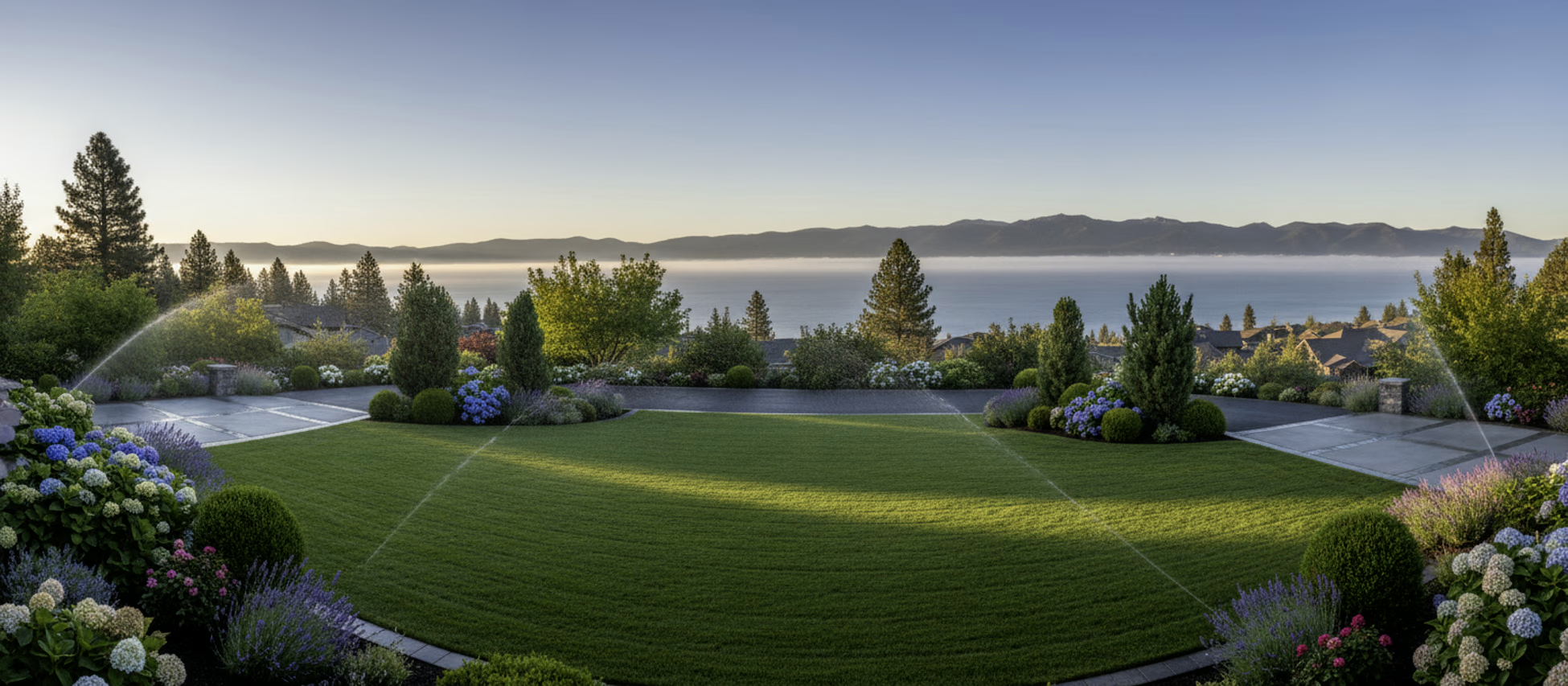

Transforme su propiedad en Incline Village con un paisajismo estacionalmente perfecto. Como residente o propietario en esta zona de alta altitud, usted ya sabe que el tiempo aquí no se parece al de otras partes. El verano es breve y el invierno llega antes de lo esperado. En Lake Scaping LLC, hemos desarrollado un enfoque estacional de mantenimiento de jardines diseñado específicamente para propiedades en Incline Village y Crystal Bay, Nevada.
En Incline Village, a 6,200 pies de altura, cada día cuenta. Nuestra experiencia en el mantenimiento de jardines en Incline Village nos permite ofrecer soluciones precisas para cada momento del año, maximizando la belleza y la funcionalidad de su propiedad durante todo el ciclo anual.
At Incline Village's elevation, the window for most outdoor landscape work is compressed into approximately 5 months: mid-May through mid-October. Within that window, specific tasks have specific optimal timing windows — often just 2–3 weeks — after which the opportunity is missed for the season. The consequences of mis-timing at Lake Tahoe elevation are more severe than at lower elevations: fertilizer applied late stimulates frost-tender growth; pruning during bark beetle flight season creates entry points for beetle infestation; irrigation startup before soil warms enough wastes water on dormant plants; irrigation winterization delayed even one week can coincide with the first hard freeze and result in a fully cracked system.
Lakescaping LLC's month-by-month Alpine Landscaping Calendar is built around the actual phenological events (plant growth stage, soil temperature, pest flight season, precipitation pattern) that define the optimal timing for each task at Lake Tahoe Nevada properties — not a generic schedule adapted from lower-elevation sources.
Landscape assessment: Walk the property as snow recedes to assess winter damage — heaved pavers, leaning retaining walls, broken branches, erosion channels. Document damage before it is obscured by spring vegetation.
Irrigation planning: Review last season's irrigation performance, schedule spring startup service, and identify any components that need replacement before the system is pressurized.
Plant ordering: Order native plants and landscape materials early — Tahoe Basin nurseries have limited stock of alpine-appropriate species and typically sell out by mid-May. Ordering in March ensures availability for spring planting.
Permit applications: Submit TRPA or Washoe County permit applications for landscape projects requiring permits. Early submission is important — permit review timelines of 4–8 weeks mean applications submitted in April enable May/June construction starts.
Irrigation startup (late May): After soil temperature at 6 inches exceeds 45°F and risk of hard freezes has passed, activate irrigation system zone-by-zone with damage assessment. Program smart Rainbird or Toro controller for spring schedule.
Pre-emergent weed control: Apply pre-emergent herbicide before soil temperature reaches 55°F — typically mid-May at Incline Village. This is the single highest-ROI weed management investment of the year.
Hardscape repair: Address frost heave in paver surfaces, reset displaced pavers, re-compact settling areas. Spring is the optimal time — ground is workable, base material is accessible, and repairs can be made before the growing season landscape growth makes access more difficult.
Tree and shrub inspection: Inspect pines for bark beetle activity from previous season (fresh boring dust, pitch tubes, yellowing). Identify any winter-killed wood for removal before bark beetle flight season begins.
Planting (June 1–20): Primary planting window for trees, shrubs, and perennials. Plant early enough in June to allow root establishment before July heat stress. Avoid planting during the bark beetle high-risk window (approximately June 15 – August 1) for pine species — fresh pruning cuts on pine attract beetles during active flight season.
Fertilization (first application): Apply slow-release balanced fertilizer to turf and non-native ornamentals. Not required for established natives in Tahoe Basin soils. Apply by mid-June for full utilization during primary growing season.
Mulch application: Top-dress planting beds to 3-inch depth with arborist wood chips. Apply after pre-emergent application to lock in the pre-emergent barrier.
Irrigation monitoring: Smart controllers adjust automatically; conventional timers require manual schedule adjustment for peak demand. Check for system issues (broken heads, coverage gaps) during peak season when plant stress from inadequate irrigation is most visible.
Weed management: Post-emergent herbicide for invasive species (cheatgrass, whitetop, thistle) during active growth. Hand removal in areas where herbicide cannot be used. Weed before seed set — preventing seed production is critical for reducing pressure in subsequent seasons.
Bark beetle monitoring: Peak beetle flight window is July–August. Avoid pine pruning during this period. Inspect pines weekly for signs of new infestation. Infested trees should be addressed promptly — an infested tree that is removed before larvae develop to adult stage reduces the beetle population pressure on neighboring trees.
Fall fertilization (turf): Apply potassium-based fertilizer to turf in September. Promotes root development without stimulating frost-tender shoot growth. Do not apply nitrogen-heavy fertilizers after mid-August.
Irrigation winterization (September 15–October 10): The most critical timing-dependent task of the year. Complete compressed-air blow-out of all irrigation zones, winterize backflow preventer, and set smart controller to rain/off mode before the first hard freeze — typically late September to early October at Incline Village.
Plant protection: Install A-frame snow shields over susceptible ornamental shrubs. Apply anti-desiccant spray to broadleaf evergreens. Stake sensitive plants that may be damaged by snow loading.
Planting (second window): Fall planting of hardy trees and native shrubs (September 1–30) allows root establishment before dormancy, with the advantage of reduced water demand during establishment compared to spring planting.
Snow removal: Maintain access to primary pathways, steps, and fire department access. Use plastic snow shovels and ice melt products that do not damage pavers or plants (avoid rock salt near planted areas — use sand or potassium chloride-based de-icers).
Drainage monitoring: Check that drainage outlets and channel drain inlets remain clear of ice blockage during freeze-thaw cycles. Blocked outlets can cause drainage system back-pressure that damages pipes and structures.
Lakescaping LLC (Nevada C-10 #0086320) has served property owners in Incline Village, Crystal Bay, Glenbrook, and Zephyr Cove for 33+ years. Contact us for a no-obligation on-site consultation to assess your property's specific needs.
Serving Nevada properties only — Incline Village, Crystal Bay, Glenbrook, and Zephyr Cove.
There are two planting windows at Incline Village: primary (June 1–15, before bark beetle high-risk period) and secondary (September 1–30, fall establishment before dormancy). The June window is optimal for most species because it provides the longest establishment period before winter dormancy. The September window is appropriate for cold-hardy natives and established container plants. Avoid planting during July–August bark beetle high-risk period for pine species, and avoid planting after October when soil temperature falls below the threshold for root growth.
Target the window from September 15 through October 10 for irrigation winterization at Incline Village. The first hard freeze (below 28°F sustained for several hours) typically occurs between late September and mid-October. Scheduling winterization before September 15 is conservative but appropriate if you are a seasonal resident who will be leaving the property before mid-October. We typically fully book out for winterization by mid-September for the October window — contact us before September to reserve your service appointment.
Sand (applied for traction without melting ice) is the safest option for pavers and for plants near treated areas. Potassium chloride (KCl) de-icers are less damaging to concrete and plants than sodium chloride (rock salt) and are our recommendation for areas near planted beds. Calcium chloride is effective at lower temperatures but can cause concrete surface scaling if applied repeatedly in high concentrations. Rock salt (sodium chloride) is effective but damages plants, corrodes steel, and can cause concrete surface scaling — we recommend against it near landscape plantings.
The primary bark beetle flight season at Lake Tahoe elevation is approximately June 15 through August 31, with peak activity in July and early August. During this period, avoid pruning pine trees — fresh pruning wounds on pine attract beetles seeking host material. Beetle prevention involves maintaining tree vigor through appropriate irrigation, avoiding root zone compaction, and removing infested trees promptly before larvae develop to adult stage. We monitor client properties for bark beetle activity as part of our seasonal maintenance programs.
Yes — September and October are productive construction months at Incline Village for most hardscape and drainage work, before ground freeze. Paver installations can continue as long as the base aggregate is workable (above freezing). Irrigation pipe installation should be completed before ground frost penetrates more than a few inches. Plant installation can continue through late September. Work that requires concrete installation (footings, decorative concrete) should be completed by mid-October to avoid freeze damage to fresh concrete.
our mountain estate deserves expert craftsmanship. Partner with our licensed Nevada team to design and build a resilient, high-end landscape tailored to your vision.