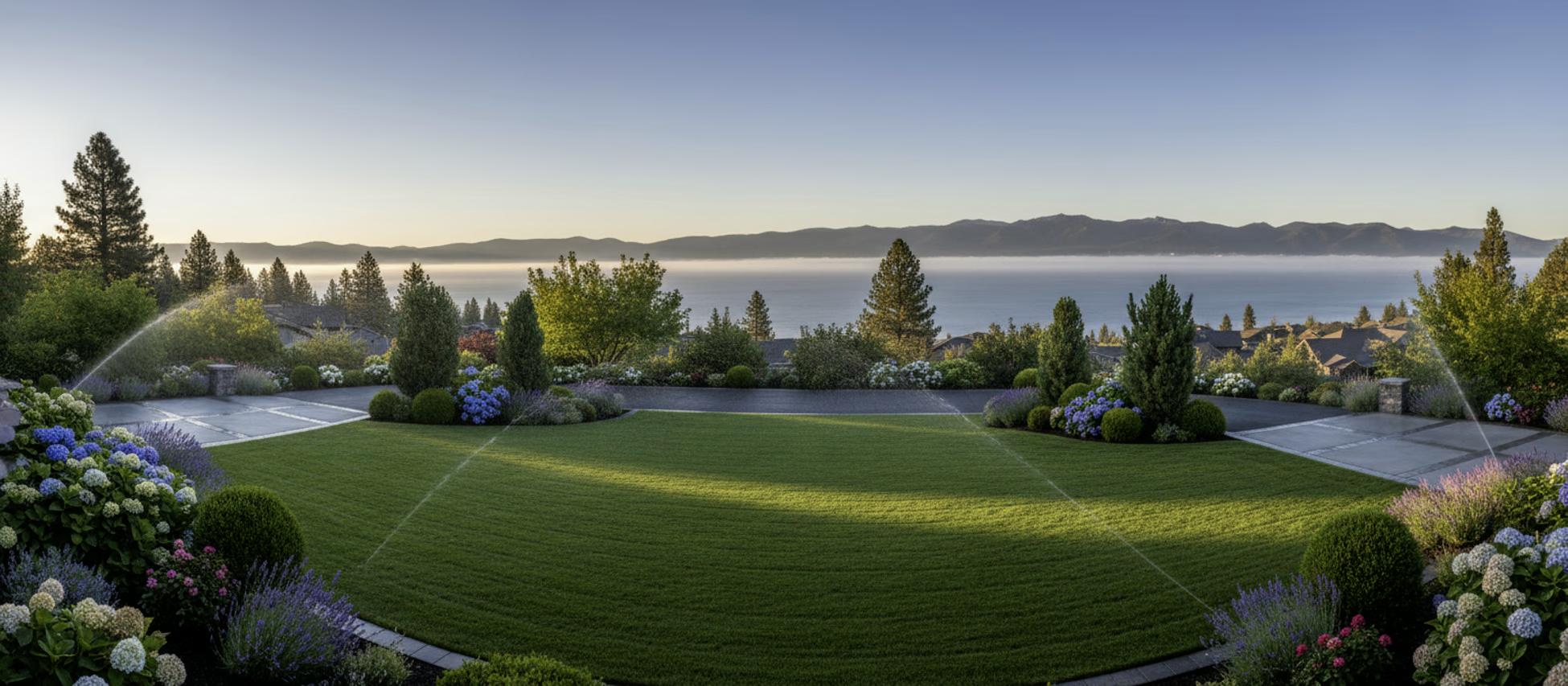

Alpine landscape design at 6,200 feet elevation operates under constraints that fundamentally reshape how conventional landscape design principles apply. The compressed growing season, the dominance of the Sierra Nevada's granite-and-pine aesthetic, TRPA's land capability and coverage regulations, and the engineering demands of freeze-thaw cycling are not modifiers to standard practice—they are the foundation from which all design decisions flow.
Over 33 years of landscape design and installation at Nevada Lake Tahoe properties, Lakescaping LLC has developed a design philosophy grounded in four principles: ecological fit, engineering first, aesthetic coherence, and regulatory compliance. This guide describes how each principle shapes our approach to every project.
Plant material must be selected for ecological fit with the specific microclimate, soil type, and moisture regime of each planting zone—not for aesthetic preference alone. At Incline Village, this means:
Exposure classification: Each planting area is classified by solar exposure (full sun south-facing, partial shade north-facing), wind exposure (exposed ridgelines versus protected coves), and moisture availability (natural drainage versus supplemental irrigation). Species selection begins with these classifications, not with a standard palette.
Soil-adapted species: Decomposed granite soils drain rapidly and are nutrient-poor. Plants selected for these conditions—native bitterbrush, rabbitbrush, penstemon, manzanita—outperform nursery-standard ornamentals that require amended soils and regular fertilization to survive.
Cold hardiness verification: We specify plants with documented cold hardiness to USDA Zone 5 or below (minimum -20°F). Plants marketed as Zone 7 or mild climate perennials that appear in general nursery catalogs are not appropriate for Lake Tahoe installations without cold hardiness documentation.
Drainage, hardscape base systems, and structural elements must be engineered before aesthetic decisions are made. The sequence cannot be reversed: a beautiful planting design that sits on a waterlogged base or insufficient hardscape structure will fail within 2–3 seasons at Lake Tahoe. We establish:
The strongest Lake Tahoe landscape designs establish a clear material and color vocabulary and maintain it consistently across all elements—hardscape, planting, water features, structures, and lighting. The most successful properties we have designed share these characteristics:
Stone consistency: A single primary stone material (typically locally sourced Sierra Nevada granite) is used across boulder features, wall caps, patio borders, and dry creek beds. Mixing stone types creates visual fragmentation that competes with the spectacular natural backdrop rather than complementing it.
Plant scale appropriate to property scale: Estate properties in Incline Village with 100-foot setbacks and large lots require plant material at the scale of the space—specimen trees, mass plantings of shrubs, and bold boulder placements. Foundation plantings that work at sea-level suburban properties look undersized and tentative against the grand scale of the Sierra Nevada landscape.
Transition management: The transition between designed landscape and the natural forest or rock outcroppings at the property edge is a critical design opportunity. We design these transitions explicitly—rather than allowing them to occur by accident—using native plant species and stone materials that create a coherent progression from designed to natural.
TRPA's land capability classification system is not a constraint imposed after design—it is a design parameter from the beginning. The most effective Lake Tahoe landscape designs maximize the use of allowed coverage while improving the ecological performance of the parcel: reducing runoff through infiltration gardens, improving habitat through native planting zones, and creating TRPA-eligible impervious surface reductions through synthetic turf replacements of asphalt or concrete.
We begin every design project with a TRPA parcel analysis that identifies:
Lakescaping LLC (Nevada C-10 #0086320) has served property owners in Incline Village, Crystal Bay, Glenbrook, and Zephyr Cove for 33+ years. Contact us for a no-obligation on-site consultation.
Serving Nevada properties only — Incline Village, Crystal Bay, Glenbrook, and Zephyr Cove.
TRPA's land capability classification system rates each parcel based on its sensitivity to development impact—soils, slope, and proximity to water. Higher-capability zones allow more development; lower-capability zones require more protection. The classification determines how much impervious surface is allowed on the parcel and what land coverage mitigation may be required for additions. We assess land capability as part of every landscape design project.
The most successful Lake Tahoe landscapes take cues from the property's architecture and immediate surroundings. Log-and-timber architecture benefits from naturalistic plantings, granite boulder features, and informal pathways. Contemporary mountain architecture with clean lines and glass can support more formal geometric hardscape. Properties directly adjacent to natural forest or rocky terrain benefit from transition-sensitive design that blurs the edge between designed and natural.
A low-maintenance design for a part-time property typically relies on: native and xeric plant species that require minimal irrigation once established (1–2 years of establishment irrigation, then drip supplemental only in drought), decomposed granite or gravel groundcovers in areas without water features, limited or no natural turf, and synthetic turf in areas where a lawn aesthetic is required. The highest-maintenance elements are natural turf areas, annual flower beds, and water features with fish—all of which can be designed out or simplified.
TRPA encourages but does not require native planting in most residential landscape areas. However, land disturbance projects (grading, removal of native vegetation) may require mitigation planting of native species. Properties in stream environment zones or other sensitive areas may have specific vegetation requirements. We assess TRPA planting requirements as part of every design project.
The June–September installation window means that complex projects requiring multiple phases (hardscape, irrigation, planting, lighting) must be carefully sequenced to complete before fall. Projects that cannot be completed in a single season require design consideration of what is built first (hardscape and drainage always precede planting) and how incomplete areas are stabilized and managed over winter.
our mountain estate deserves expert craftsmanship. Partner with our licensed Nevada team to design and build a resilient, high-end landscape tailored to your vision.