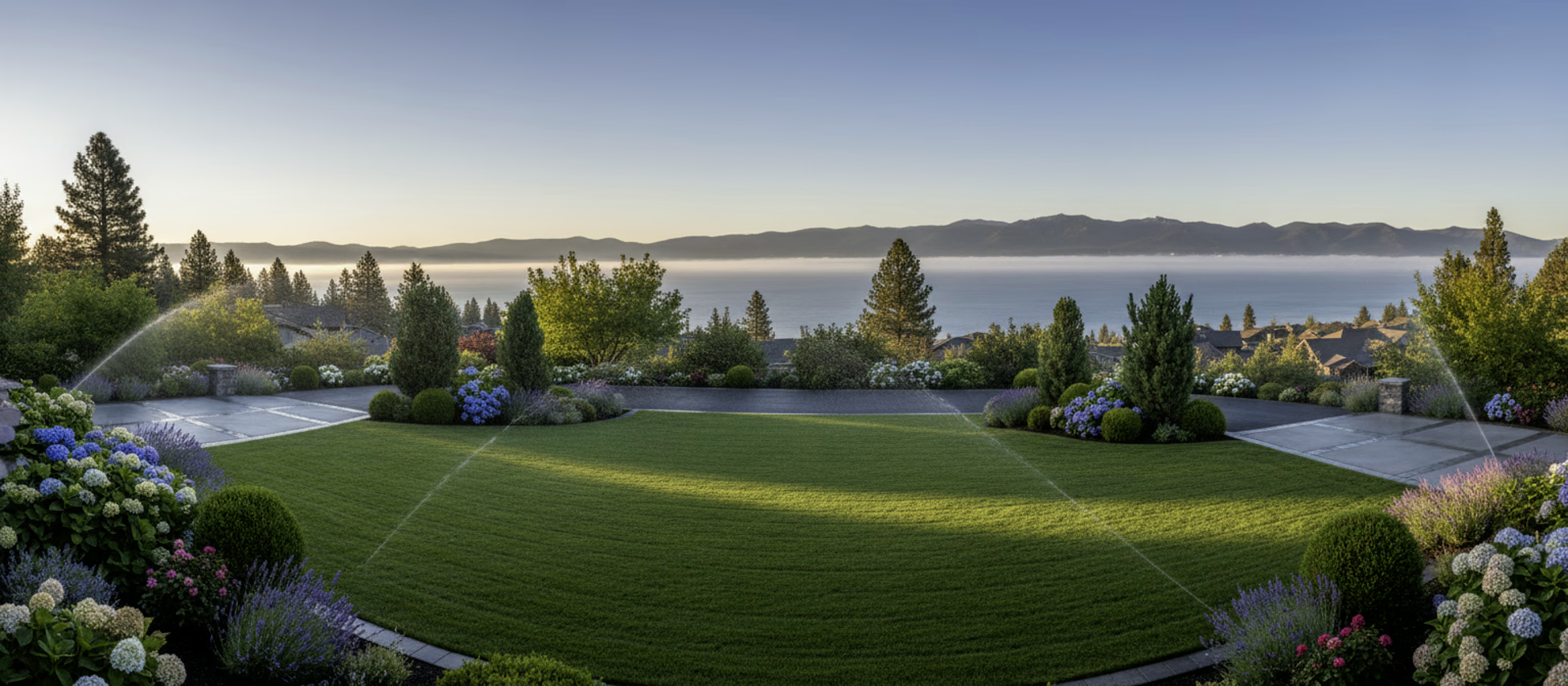

At Incline Village and Crystal Bay, the question is not whether your landscape will face severe winter conditions—it is whether your landscape is prepared for them. Properties at 6,200 feet regularly experience overnight lows below 0°F, snowpack of 6–10 feet, and rapid freeze-thaw cycles in early winter and spring. Landscape components that are not properly winterized by mid-October face predictable failure modes: cracked irrigation pipes, frost-heaved paver installations, winter-burned plant material, and damaged water features.
Lakescaping LLC has refined its fall winterization protocols over 33 years of working at Lake Tahoe elevations. This guide describes our complete process so you understand exactly what is being done to protect your landscape investment.
Irrigation winterization is the most time-sensitive element of fall preparation. Water trapped in pipes and components will freeze and expand, cracking PVC pipes, shattering backflow preventers, and damaging valve manifolds. At Incline Village elevations, this can occur as early as mid-October.
We use a commercial 185 CFM air compressor to systematically purge all zones of standing water. Each zone is activated individually, and compressed air is cycled until no water appears at heads or emitters. The blow-out sequence follows mainline to laterals to emitters, ensuring complete purging of all trapped water.
All winterization work uses Rainbird and Toro system standards for component removal and storage procedures.
Ponds, fountains, waterfalls, and pondless water features all require specific winterization procedures at Lake Tahoe elevations.
All pump and filtration equipment is removed, cleaned, and stored indoors before the first hard freeze. Pumps stored in water that freezes solid are damaged beyond repair. We remove Toro and Rainbird pump systems, clean impellers and filter housings, and store in temperature-controlled conditions.
All water feature plumbing is drained or blown out with compressed air. Return lines, skimmer plumbing, and waterfall supply lines are fully purged. We verify that no standing water remains in any below-grade component.
Pond water levels are lowered to 6–8 inches below the freeze zone. Basin is cleared of debris, net cover is installed to prevent leaf accumulation under snow, and aeration equipment is positioned for winter operation if koi or other livestock are present.
Paver patios and walkways do not require wrapping or covering, but fall is the time to identify and address heave vulnerabilities before winter makes them worse.
Proper plant preparation minimizes winter damage and simplifies spring cleanup.
Perennial cutback: Most perennials are cut back to 3–4 inches after the first frost. Exceptions include ornamental grasses (left for winter interest and bird habitat) and plants with hollow stems (Japanese anemone, sedum) that can trap ice.
Mulching: A 3–4 inch layer of wood chip mulch is applied over perennial crowns and newly planted shrubs before freeze-up. This moderates soil temperature swings and protects crowns from frost heave.
Anti-desiccant application: Broadleaf evergreens and marginally hardy shrubs receive an application of anti-desiccant spray to reduce winter moisture loss through foliage.
Tree and shrub protection: Young trees and shrubs adjacent to driveways or snowplow areas receive burlap wrap or plastic tree guards to prevent salt and mechanical damage.
The last service of the season for turf areas includes:
Lakescaping LLC (Nevada C-10 #0086320) has served property owners in Incline Village, Crystal Bay, Glenbrook, and Zephyr Cove for 33+ years. Our team understands the unique demands of Lake Tahoe elevation landscaping. Contact us for a no-obligation on-site consultation.
Serving Nevada properties only — Incline Village, Crystal Bay, Glenbrook, and Zephyr Cove.
We target completion by October 15th for all irrigation, water features, and plant protection work. This provides a buffer before the typical first hard frost. For clients who wait until late October, there is significant risk that the first freeze arrives before all work is complete. We recommend scheduling in August or September to secure a spot.
Water remaining in above-grade and shallow underground pipes will freeze and expand, cracking PVC pipe, manifolds, and backflow preventers. Repair costs for freeze damage typically run $500–$2,000+ depending on component damage. Proper blow-out typically costs $150–$300 and prevents all of this damage.
Yes. Koi ponds require a dedicated aeration system to remain operating through winter—koi need liquid water and dissolved oxygen to survive. We position an aerator at the pond's deepest point to maintain an open water area through ice cover. Koi feeding is reduced and eventually stopped as water temperatures drop below 50°F.
No. Completely draining a pond exposes the liner to UV damage, freeze-thaw stress, and potential puncture. We recommend lowering the water level 6–8 inches below the normal waterline to reduce freeze expansion pressure on the liner and coping, but maintaining water in the basin through winter.
Yes. Our seasonal maintenance contracts include fall winterization (irrigation blow-out, water feature shutdown, plant protection) and spring startup (irrigation restart, water feature reopening, damage assessment). Annual contract clients receive priority scheduling and preferred rates.
our mountain estate deserves expert craftsmanship. Partner with our licensed Nevada team to design and build a resilient, high-end landscape tailored to your vision.