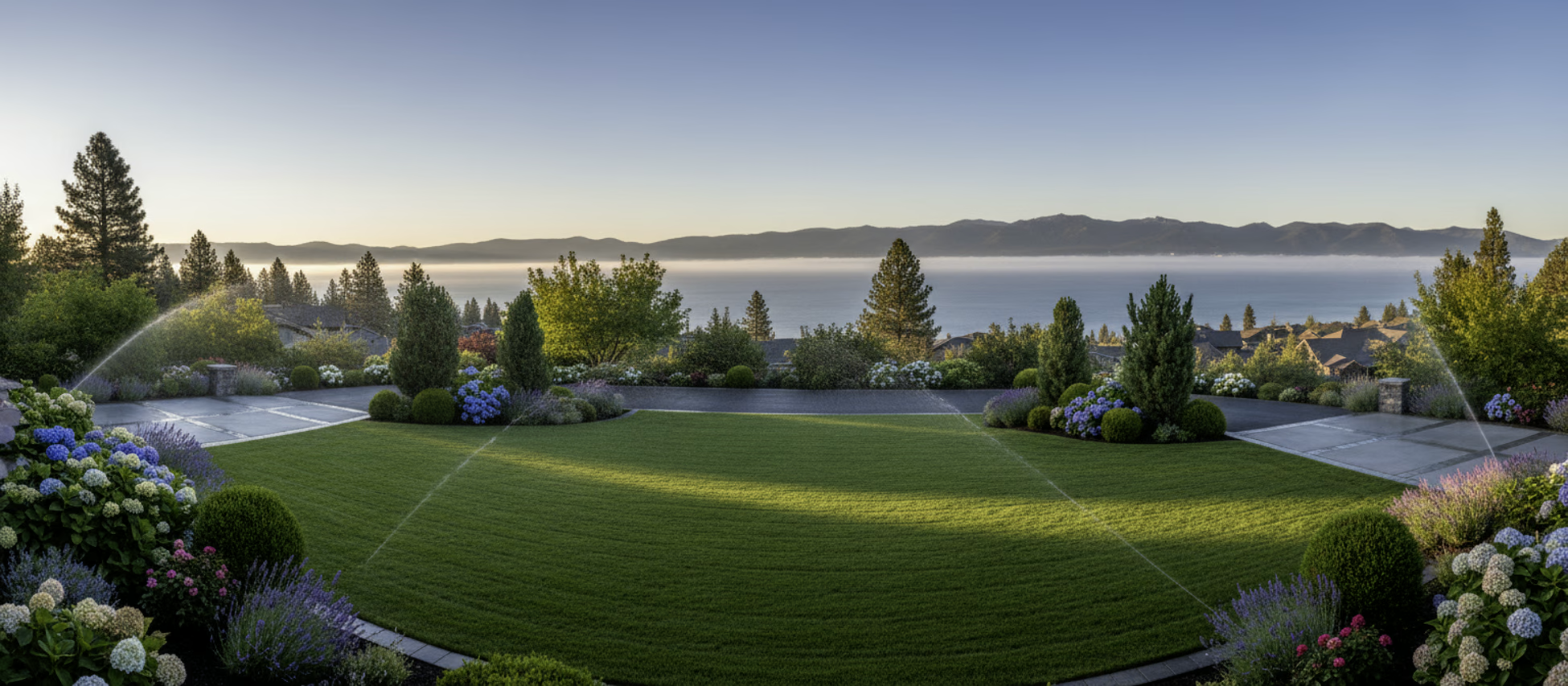

Counterintuitively, fall is an excellent planting season at Incline Village and Crystal Bay—despite the proximity to the first hard freeze. Trees and shrubs planted in September and early October benefit from soil temperatures still warm enough for root establishment, reduced transpiration stress (cool air temperatures mean plants lose less water through foliage), and the natural growth trigger that soil moisture provides as fall rains arrive. Plants that establish a root system before freeze-up enter their first spring with significant competitive advantages over spring-planted equivalents.
The window is narrow—we target September 1 through October 10 for fall planting at Lake Tahoe elevations. After mid-October, soil temperatures drop below 45°F and root activity ceases. Planting after this date is essentially cold storage for the plant until spring, with no establishment benefit.
TRPA encourages native plantings throughout the Lake Tahoe basin. Fall planting of native perennials takes advantage of their genetic programming for autumn root development, mimicking natural seed fall and establishment timing.
Deciduous shrubs benefit significantly from fall planting at altitude—they can direct all energy to root establishment without supporting foliage transpiration.
Bitterbrush (Purshia tridentata): The signature native shrub of the Tahoe basin, critical for deer browse and erosion control. Fall planting mimics natural seed dispersal timing. Extremely drought-tolerant once established.
Rabbitbrush (Ericameria nauseosa): Fall gold blooms, silver foliage, excellent for dry slopes and sunny exposures. Native and TRPA-encouraged on disturbed sites.
Mountain mahogany (Cercocarpus ledifolius): Slow-growing but extremely long-lived, important wildlife habitat species. Fall planting preferred.
Compact Mugo pine: Excellent for screening and year-round structure in foundation plantings. Handles snow load well. Fall planting allows extensive root establishment before spring growth flush.
Native currant (Ribes species): Fast-establishing, wildlife habitat value, attractive spring bloom. Both wax currant and mountain pink currant are native to the Tahoe basin.
Planting technique at altitude differs from standard residential planting:
Hole size: Planting hole should be 3× the container diameter and only as deep as the rootball—planting too deep is the most common cause of tree and shrub failure at Lake Tahoe.
Soil amendment: For most plants in decomposed granite soils, minimal amendment is recommended—native plants adapted to lean soils establish better without amendment. For ornamentals from nutrient-richer native ranges, a 20% compost blend in the backfill improves establishment.
Mulching: Apply a 3-inch layer of wood chip mulch to a 3-foot diameter around each plant immediately after planting. Mulch moderates soil temperature, retains moisture, and suppresses competing weeds through the critical establishment period.
Fall irrigation: Even fall plantings require irrigation through the remainder of the fall season—until the first hard freeze shuts down root activity. A drip system run 2–3 times per week at low volumes keeps soil moist at the root zone during establishment.
Lakescaping LLC (Nevada C-10 #0086320) has served property owners in Incline Village, Crystal Bay, Glenbrook, and Zephyr Cove for 33+ years. Contact us for a no-obligation on-site consultation.
Serving Nevada properties only — Incline Village, Crystal Bay, Glenbrook, and Zephyr Cove.
We target completion of all fall planting by October 10th. After this date, soil temperatures at 6,200 feet have typically dropped below the threshold for meaningful root establishment, and the risk of unexpected freeze events before plants are fully watered-in increases significantly. Plants installed after mid-October are essentially waiting for spring without benefiting from fall root development.
Yes—fall cleanup and planting can often be coordinated in a single mobilization, which reduces travel costs for your property. We schedule combined fall cleanup and planting visits for clients who want to take advantage of the fall planting window without an additional service call.
Yes, until the soil freezes. Root activity continues until soil temperature drops below 40°F, which typically occurs in late October or November at Incline Village. Watering after a frost event is appropriate as long as liquid water can enter unfrozen soil. Once the ground freezes, irrigation should be shut down for the season.
Tender perennials and plants from warm-climate origins (lavender cultivars from Mediterranean regions, some salvia species, ornamental grasses that are only marginally hardy) are better planted in spring when they have a full growing season to establish cold hardiness. Native and alpine-adapted plants are generally excellent fall planting candidates.
Aged wood chip mulch (3 inches) is the best all-around mulch for Lake Tahoe perennial plantings. Avoid fresh wood chips, which can tie up nitrogen during decomposition. Pine needle mulch is locally available and appropriate for native plantings. Avoid landscape fabric under mulch—it impedes water infiltration and beneficial soil biology, and degrades into a plastic mess within 3–5 years.
our mountain estate deserves expert craftsmanship. Partner with our licensed Nevada team to design and build a resilient, high-end landscape tailored to your vision.