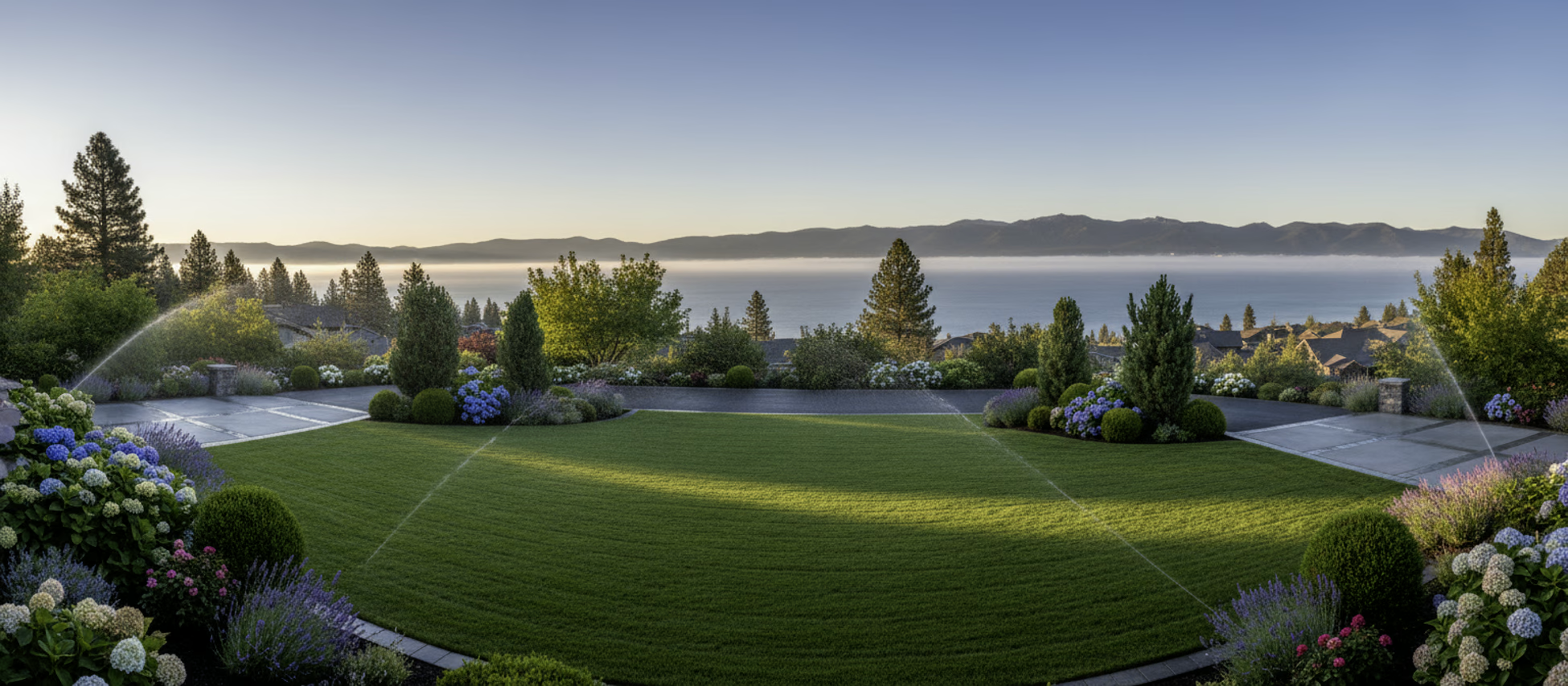

At 6,200 feet, evaporation rates are significantly higher than at sea level—thin air holds less moisture, and the intense UV radiation common at altitude accelerates surface moisture loss. Traditional spray heads that distribute water through the air lose 20–40% of their output to evaporation before it ever reaches plant roots. Drip irrigation eliminates this loss by delivering water directly to the root zone at a rate the soil can absorb, typically 0.5–2.0 GPH per emitter.
TRPA water quality requirements add an additional reason to prefer drip over spray in the Lake Tahoe basin: runoff from over-irrigated landscapes is a documented contributor to algae growth in the lake. Drip systems, when properly designed, eliminate irrigation runoff entirely by matching application rate to soil infiltration rate.
Effective drip design at Lake Tahoe elevations requires accounting for several factors not relevant at lower elevations:
Incline Village soils range from decomposed granite (fast-draining, low water-holding capacity) to clay pockets in drainages (slow-draining, prone to waterlogging). A single emitter size and spacing will not work across a diverse property. We map soil types during the design phase and specify emitter flow rates accordingly—typically 0.5 GPH for sandy soils with 12-inch spacing, and 1.0 GPH for denser soils with 18-inch spacing.
Most Incline Village properties have significant grade changes. Without pressure compensation, drip emitters on a sloped system will over-apply water at the bottom of the run and under-apply at the top. We specify pressure-compensating emitters (typically Rainbird PC series or Toro equivalent) for any run with more than 3 feet of elevation change. A pressure regulator on each zone inlet ensures consistent 15–25 PSI operating pressure regardless of mainline fluctuations.
Drip mainlines and sub-mains must be buried below the frost line (minimum 18 inches in Incline Village) to prevent freeze damage. Surface-run laterals and emitter tubing are designed to be easily drained or blown out for seasonal winterization.
Different planting types require different drip configurations:
Trees (established): 2–4 emitters at the drip line, 1.0–2.0 GPH each, 2–4 hours per week in summer peak. Deep, infrequent irrigation encourages deep root development that improves drought and wind resistance.
Shrubs: 1–2 emitters per plant, 0.5–1.0 GPH, 3–4 hours per week. Spacing adjusted for mature canopy spread.
Perennials and groundcovers: Grid or in-line emitter tubing at 12-inch spacing, 0.5 GPH, 2–3 hours per week. System adjusted seasonally as plant material fills in.
Raised beds and containers: Individual emitter lines per container, 0.5 GPH, controlled independently due to faster drying rates in containerized media.
Drip systems perform at their best when paired with a smart irrigation controller that adjusts run times based on real-time weather data. We program all new drip installations with Rainbird or Toro smart controllers configured for:
Smart controller integration typically reduces water consumption by an additional 20–30% compared to drip with a conventional timer.
All irrigation systems connected to potable water supplies in Washoe County require an approved backflow preventer. Drip systems carry a higher cross-connection risk than spray systems because emitters can remain in contact with soil and plant material. We install pressure vacuum breaker (PVB) backflow preventers on all drip systems and schedule annual certification as required by Washoe County.
Lakescaping LLC (Nevada C-10 #0086320) has served property owners in Incline Village, Crystal Bay, Glenbrook, and Zephyr Cove for 33+ years. Contact us for a no-obligation on-site consultation.
Serving Nevada properties only — Incline Village, Crystal Bay, Glenbrook, and Zephyr Cove.
Properly designed drip systems typically reduce irrigation water use by 30–50% compared to spray systems on the same property. The savings come from eliminating evaporation loss, eliminating overspray onto hardscaping and pathways, and enabling more precise zone-by-zone water delivery matched to plant needs.
Yes. We design all drip systems for complete seasonal winterization. Surface emitter tubing and laterals can be drained manually or blown out with compressed air. Buried mainlines are installed below frost depth. The annual blow-out procedure is included in our fall maintenance service.
Yes. Drip emitters have very small orifices (0.5–2.0 GPH) that clog easily with sediment, algae, and mineral deposits. We install a 200-mesh screen filter at the zone inlet for every drip zone. Filters are checked and cleaned as part of our annual spring startup service.
A typical residential drip system serving 5–8 zones takes 1–2 days to install. Larger properties with more zones, complex terrain, or significant trenching requirements may take 3–4 days. All installations include controller programming and a client orientation on system operation.
Subsurface drip irrigation (SDI) can be used for lawn areas and is increasingly popular in water-conscious communities. We design SDI systems with emitter tubing buried 4–6 inches below grade at 12-inch spacing. These systems eliminate evaporation entirely and can reduce lawn water use by 40–60% compared to spray irrigation.
our mountain estate deserves expert craftsmanship. Partner with our licensed Nevada team to design and build a resilient, high-end landscape tailored to your vision.